
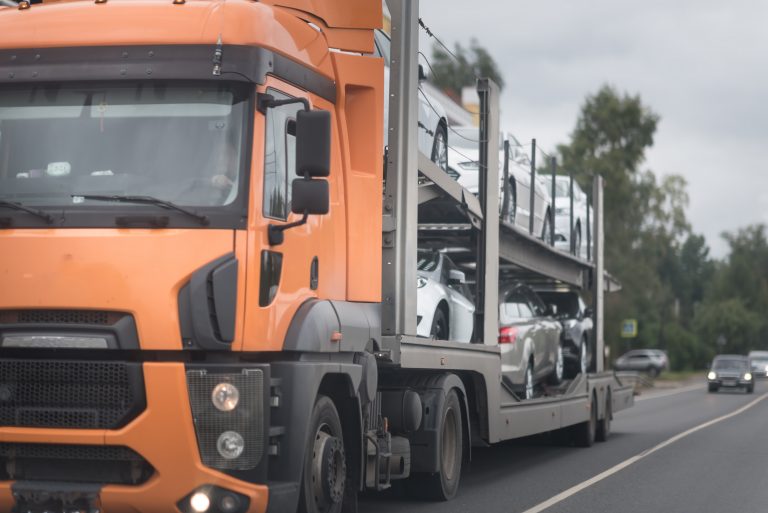
One of the first decisions you will make is whether to ship on an open or an enclosed trailer. Open is cheaper and offers less protection. Enclosed costs more and shields the car from the road. Both are safe ways to move a vehicle. Here is how to decide.
What is open car shipping?
An open carrier is a trailer with no cover or container. These are the nine- and ten-car rigs you see on the interstate and the way new cars get to dealerships. It is the most common form of auto transport because it is economical and widely available. The trade-off is exposure: your car rides in the weather and in road dust, and it needs careful securing during transit.
What is enclosed car shipping?
An enclosed carrier is fully walled on all sides, usually in hard fiberglass or heavy canvas. It is the standard for luxury, antique, and rare vehicles that need extra protection. That protection comes at a price: enclosed transport typically runs 70 to 80 percent more than open.
Understanding the costs
- Open transport averages around $1 per mile, with most shipments landing between $1,000 and $2,000. Open trailers carry more vehicles per load, which spreads the cost across customers.
- Enclosed transport runs 70 to 80 percent higher. You are paying for a smaller load and a more specialized trailer.
- Distance raises the total but lowers the per-mile rate.
- Vehicle size and weight matter on both. Larger vehicles take more space and fuel.
- Season moves prices. Summer and January are peak; February is usually quiet.
- Insurance is included with any reputable company, but coverage limits vary. Make sure the coverage matches the value of your car.
- Extras such as expedited pickup or special handling add to the bill. Ask up front.
Shop around, and be wary of a quote far below everyone else's. Good service costs something.
Which is cheaper?
Open, every time. It is the most popular and the most available option for cars, trucks, vans, and SUVs. Enclosed is safer and more secure, but for a standard vehicle the added cost rarely buys much. It comes down to your comfort level. If you want the safest possible transport, go enclosed. If you want cheaper transport that is still considered very safe, go open.
Side by side
| Criteria | Open | Enclosed |
|---|---|---|
| Cost | Around $1 per mile | 70 to 80% more |
| Protection | Exposed to weather and debris | Shielded from the elements |
| Vehicle type | Standard daily drivers | Luxury, antique, rare, lowered |
| Capacity | Up to 10 cars per load | 1 to 6 cars per load |
| Availability | Widely available, short booking times | Fewer trucks, book ahead |
| Security | Standard | Enhanced |
| Insurance | Standard coverage | Typically higher limits |
| Recommended for | Everyday vehicles, most moves | Classic cars, high-value assets, long hauls in bad weather |
Factors to weigh
- Vehicle type. Daily commuter or family car: open. Rare, high-value, or vintage: enclosed.
- Weather. Shipping through a season of snow or storms tilts toward enclosed.
- Distance. Short hops are fine open. Cross-country hauls make enclosed more appealing for sensitive cars.
- Budget. Open is the thrifty choice. Weigh the premium against how much you value the extra protection.
- Sensitivity. Custom paint, soft tops, and low suspensions fare better enclosed.
- Timing. Open trucks are easier to book on short notice.
- Special requirements. Very low ground clearance or non-standard dimensions may need an enclosed trailer with a lift gate.
- Insurance. Whichever you choose, confirm the carrier's coverage before the car goes on the truck.
Conclusion
Open transport is the cost-effective choice for most vehicles. Enclosed is the right call when the car is worth protecting from every rock on the road. Do your research and pick the option that fits your shipment.